Behavioral Issues
Conduct Disorder vs Oppositional Defiant Disorder - Explained
Discover the essential differences between Conduct Disorder and Oppositional Defiant Disorder, helpi...

Parents often find themselves scratching their heads trying to tell the difference between Oppositional Defiant Disorder (ODD) and Conduct Disorder (CD) when it comes to their children. Both conditions come with their fair share of challenging behaviors, but understanding the subtle differences can make all the difference in offering the right support.
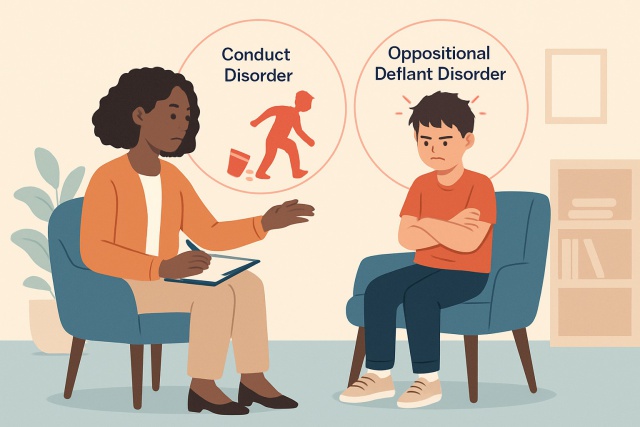
Oppositional Defiant Disorder is characterized by a steady pattern of angry or irritable moods coupled with argumentative or defiant behavior. There is also a streak of vindictiveness that lasts for at least six months. Kids with ODD often seem to push back against authority and flat out refuse to follow rules. Sometimes they deliberately get under other people's skin. These behaviors typically pop up at home or school as a way of reacting to frustration or stress.
Conduct Disorder is characterized by persistent and serious behaviors that flagrantly break social rules and violate the rights of others. The symptoms often show up as aggression toward people or animals, property destruction, lying, theft or major rule-breaking. Unlike ODD, these behaviors often lead to legal trouble and create significant problems at school, home and in social circles.
ODD and Conduct Disorder can sometimes seem like two peas in a pod when you glance at their behaviors but they actually play out quite differently in terms of severity and the types of symptoms you see. ODD usually shows up as defiance and a whole lot of irritability, whereas Conduct Disorder tends to crank things up a notch with more aggressive behaviors that might land someone in hot water with the law or cause real social headaches.
| Symptom/Behavior | ODD Presence/Severity | Conduct Disorder Presence/Severity |
|---|---|---|
| Angry or irritable mood | Quite common and tends to stick around like an unwelcome guest | Less common unless mood problems decide to crash the party too |
| Argumentative/defiant behavior | A hallmark sign, popping up frequently and often driving everyone up the wall | Present but often takes a backseat to more serious behaviors that steal the spotlight |
| Vindictiveness | Seen pretty regularly, like an annoying itch | Pops up less frequently |
| Aggression toward people | Usually on the milder side, mostly verbal jabs or non-physical standoffs | Often intense and physical, not the kind you’d want in your corner |
| Destruction of property | Rarely shows up, thankfully | Usually more common and can get pretty severe |
| Deceitfulness or theft | Occasional, like a blip on the radar | More frequent and tends to be a bigger deal |
| Serious violation of rules | Less frequent, but still happens | Common, including things like skipping school or running away |
| Impact on social/academic life | Typically moderate, mostly noticeable at home or school | Causes serious struggles across many parts of life |
What’s behind ODD and Conduct Disorder often play a hand in these tricky behaviors. Understanding these causes can feel like putting together a puzzle, sometimes with a few missing pieces, but it’s worth the effort to get a clearer picture.
Both ODD and Conduct Disorder stem from a blend of genetic, environmental and social factors. The weight of each can shift quite a bit depending on the case.
Clinicians usually separate ODD from Conduct Disorder by looking at how severe the symptoms are and how long they’ve been present. They also consider how the symptoms affect different parts of a person’s life. They rely on clear-cut criteria and handy behavior checklists to keep things on track.
"Nailing down the diagnosis between oppositional defiant disorder and conduct disorder is more important than you might think, since the treatment paths can really diverge. When the condition gets mislabeled, it tends to put the brakes on getting the right help, often leading to less-than-ideal outcomes—especially when symptoms hover near that tricky borderline." – Dr. Emily Stevens, Clinical Psychologist
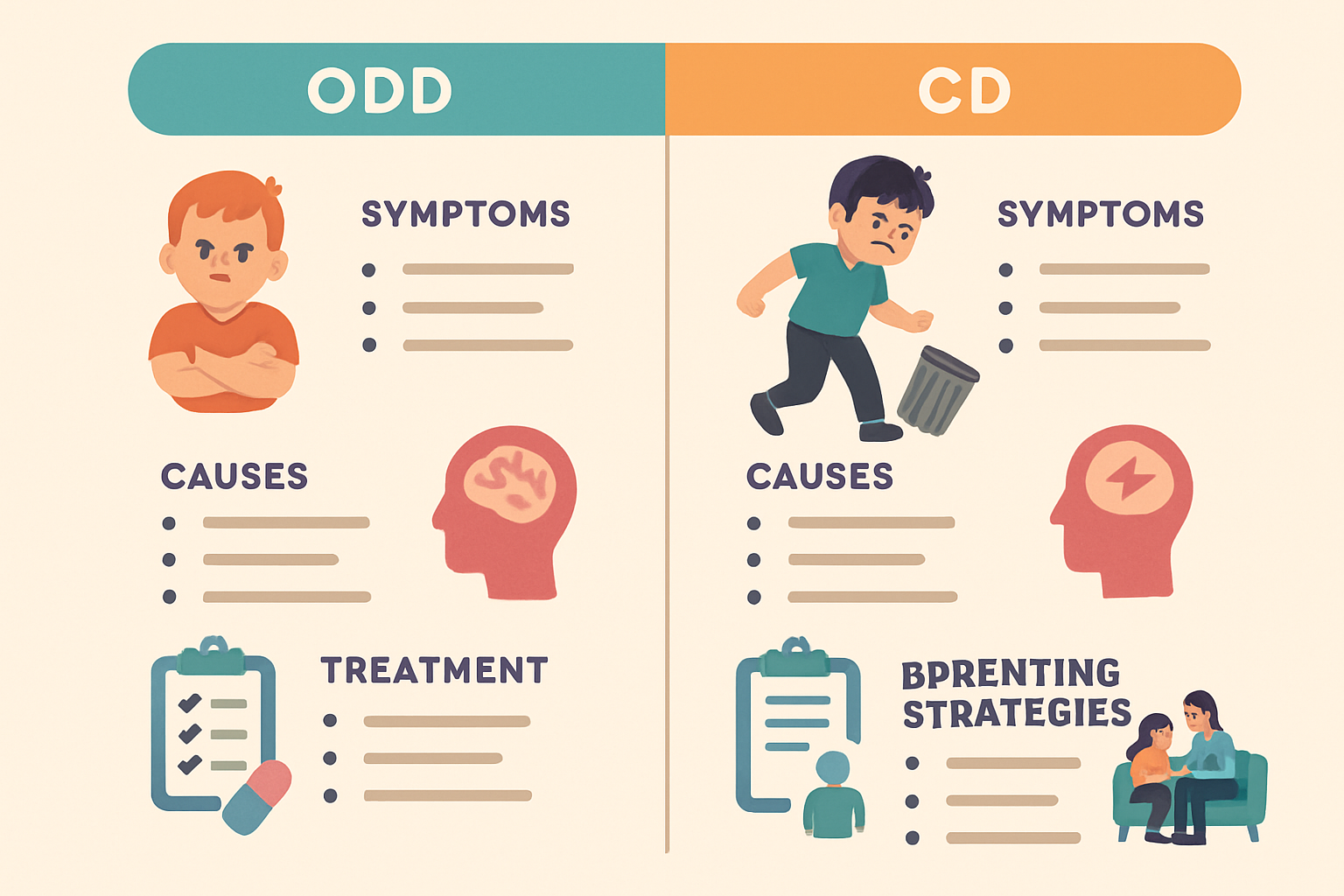
Treatment for ODD usually involves behavioral therapy and parent management training to boost coping skills and improve communication. Conduct Disorder often requires stronger interventions like cognitive-behavioral therapy (CBT), family therapy, and sometimes medication to address accompanying challenges. Educational support and community involvement play key roles in managing both conditions.
Children with untreated ODD often develop mood disorders or progress to Conduct Disorder. Thankfully many show real signs of improvement once they get the right treatment. Conduct Disorder usually points to more serious challenges in adulthood such as antisocial personality disorder, substance abuse or legal troubles.
When it comes to dealing with ODD versus Conduct Disorder, the parenting playbook shifts in some pretty important ways. Managing ODD often calls for a blend of patience and consistency that can sometimes test the strongest wills, while Conduct Disorder might require more intensive support strategies because the behaviors tend to be more severe and complex. It’s a bit like navigating a tricky path with ODD, where steady, calm guidance can work wonders, versus a steeper climb with Conduct Disorder that often needs extra hands-on help and professional intervention. In my experience, understanding these subtle but important differences helps parents feel a little less lost in the chaos and more equipped to handle the unique challenges each disorder brings.
Parents usually manage ODD and CD better when they lay down clear and consistent rules and keep their cool during conversations—easier said than done of course. Giving a little extra praise for good behavior tends to work wonders. Leaning on professional therapy and support groups often provides strategies to handle defiance and aggression without losing your sanity.
Parents might want to think about getting a professional evaluation if their child shows ongoing defiance that feels beyond what you would expect for their age or starts acting out with physical aggression or breaking laws and social rules. Keep an eye out for signs like threatening others or damaging property or stealing or running away. An early diagnosis and starting treatment can make a big difference in how kids with ODD or Conduct Disorder manage over time.

31 pages contributed
Marcus writes about mental health to foster understanding, compassion, and personal growth in everyday experiences. Through thoughtful exploration and genuine storytelling, Marcus aims to create connections and provide supportive perspectives on emotional well-being.
Read ArticlesDiscover the essential differences between Conduct Disorder and Oppositional Defiant Disorder, helpi...

Female narcissism often differs from male stereotypes, manifesting through subtle emotional manipula...
Discover how narcissistic traits manifest in mothers’ daily behaviors and the lasting effects on chi...

Is OCD neurodivergent? This article clarifies the differences and overlaps between OCD and neurodive...